Pattern Making for Knitwear: Specialized Techniques by COKAA
- thecottonkraftco
- Jan 19
- 11 min read

Why Knitwear Pattern Making Requires Specialized Expertise
Knitwear pattern making is fundamentally different from woven garment pattern making—yet this critical distinction causes countless production failures for fashion businesses attempting to use standard pattern making techniques for knit fabrics. At COKAA.in, India's 1st online sewing pattern provider, our specialized knitwear pattern making service accounts for stretch recovery, fabric stability variations, and knit-specific construction methods that transform sweater pattern design from guesswork into precision engineering.
The challenge: knit fabrics stretch 20-60% while wovens remain stable. A women's t-shirt pattern designed for wovens fails catastrophically when cut in jersey knit—necklines gape, sleeves twist, hems wave. Men's hoodie patterns require completely different ease calculations than woven jackets. Girls' dress patterns in knits need specialized techniques for maintaining shape. This isn't minor adjustment—it's completely different pattern making methodology.
COKAA's knitwear pattern making expertise covers all knit garment patterns from women's crop top patterns and legging patterns to men's sweatshirt patterns and oversized t-shirt patterns, boys' t-shirt patterns to girls' co-ord set patterns in knits. This comprehensive guide reveals specialized techniques for sweater pattern design, knit pattern engineering, stretch compensation methods, and construction approaches that ensure your knitwear patterns succeed in production.
Part 1: Understanding Knit Fabric Behavior
Successful knitwear pattern making begins with fabric knowledge.
Stretch and Recovery Properties
Why Knits Behave Differently:
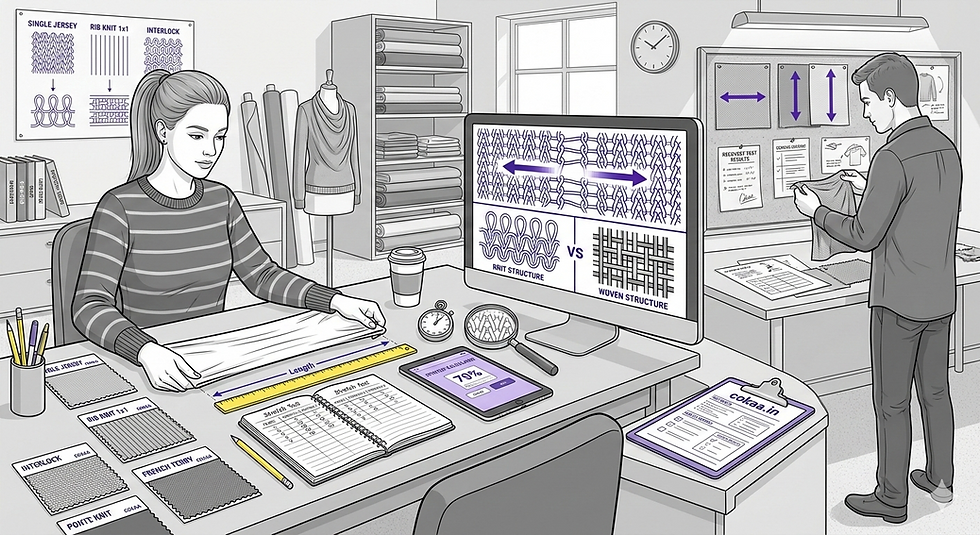
Unlike woven fabrics where yarns interlace at right angles creating stable structure, knit fabrics consist of interlocking loops allowing fabric to stretch significantly. This fundamental difference affects every aspect of pattern making service for knitwear.
Stretch Percentages by Knit Type:
Single jersey (women's t-shirt patterns, men's t-shirt patterns): 40-60% horizontal stretch, 20-30% vertical stretch. Requires significant pattern reduction from woven equivalents.
Rib knits (women's crop top patterns with rib trim, men's sweatshirt patterns cuffs): 80-100% horizontal stretch. Extreme reduction needed for fitted areas like cuffs and waistbands.
Interlock (women's legging patterns, boys' t-shirt patterns): 30-50% stretch both directions. More stable than jersey, moderate pattern adjustment.
French terry (men's hoodie patterns, unisex sweatshirt patterns): 40-50% horizontal stretch with fleece backing. Pattern must account for fabric weight and drape.
Ponte (women's formal pant patterns in knit, women's jacket patterns structured knit): 20-40% stretch. Most stable knit, closest to woven pattern making but still requires modification.
Stretch Recovery Assessment
Testing Fabric Performance:
Professional knitwear pattern making requires testing actual production fabric. COKAA's pattern making service includes fabric assessment:
Stretch Test Method: Pull fabric to comfortable extension (not maximum), hold 10 seconds, release. Measure: How much did it stretch? How quickly did it recover? Did it return to original dimension?
Recovery Categories:
Excellent recovery (women's legging patterns, activewear knits): Returns to original size within seconds. Pattern can utilize stretch for close fit.
Good recovery (women's top patterns, men's t-shirt patterns standard jerseys): Returns 90% within 30 seconds. Pattern includes minimal ease but can be fitted.
Poor recovery (women's nightwear patterns in low-quality knits): Stays stretched or recovers slowly. Pattern must include more ease; avoid depending on stretch for fit.
No recovery (damaged or low-quality knits): Doesn't return to original. Unsuitable for fitted garment patterns—avoid or treat like woven.
Fabric Stability Variations
Directional Stretch Considerations:
Most knits stretch more horizontally than vertically (women's dress patterns in jersey, girls' top patterns in knits). Pattern grain line placement critical—horizontal stretch utilized for body circumference fit, vertical stability maintains garment length.
Some knits (women's co-ord set patterns in double knit, boys' pants patterns in performance knits) have four-way stretch requiring different pattern engineering approach.
Weight and Drape Impact:
Lightweight knits (women's nighty patterns, summer t-shirt patterns): Require stabilization at shoulders, necklines to prevent stretching out. Pattern includes stay-stitching guides.
Medium weight knits (women's kurta patterns in cotton jersey, men's sweatshirt patterns): Most versatile, standard knitwear pattern making techniques apply.
Heavyweight knits (men's hoodie patterns in thick fleece, women's jacket patterns in wool knit): Pattern must account for bulk at seams, fabric weight pulling on garment.
Part 2: Specialized Pattern Making Techniques for Knitwear
Knitwear requires fundamentally different approaches than woven garment pattern making.
Negative Ease and Stretch Compensation
Understanding Negative Ease:
Woven women's formal pant patterns or men's blazer patterns require positive ease (pattern larger than body) for movement and comfort. Knitwear pattern making often uses negative ease (pattern smaller than body) because fabric stretches to fit.
Calculating Pattern Reduction:
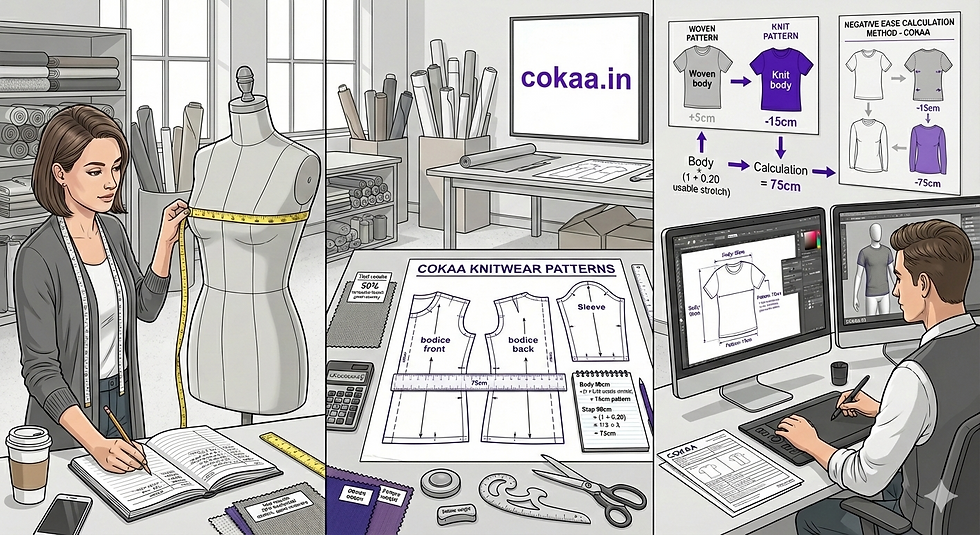
Women's t-shirt patterns: Body measurement 90cm bust, fabric has 50% stretch. Pattern reduced to 75-80cm at bust for comfortable fitted look utilizing fabric stretch.
Women's legging patterns: Body measurement 100cm hip, fabric has 40% stretch with excellent recovery. Pattern reduced to 70-75cm for athletic compression fit.
Men's oversized t-shirt patterns: Even relaxed fit knits use slight negative ease. Body 100cm chest, pattern 95cm utilizing minimal stretch for comfortable drape without excess fabric.
Fabric Stretch Percentage Method:
COKAA's sweater pattern design formula:
Test fabric stretch percentage
Determine desired fit (close, comfortable, relaxed)
Calculate pattern reduction: Body measurement ÷ (1 + usable stretch percentage)
Example: 90cm bust, 40% stretch, comfortable fit uses 20% stretch = 90 ÷ 1.20 = 75cm pattern
Knit-Specific Seam Allowances
Different from Woven Construction:
Women's dress patterns in wovens use 1.5cm seam allowances. Knitwear pattern making adjusts for stretch and construction method:
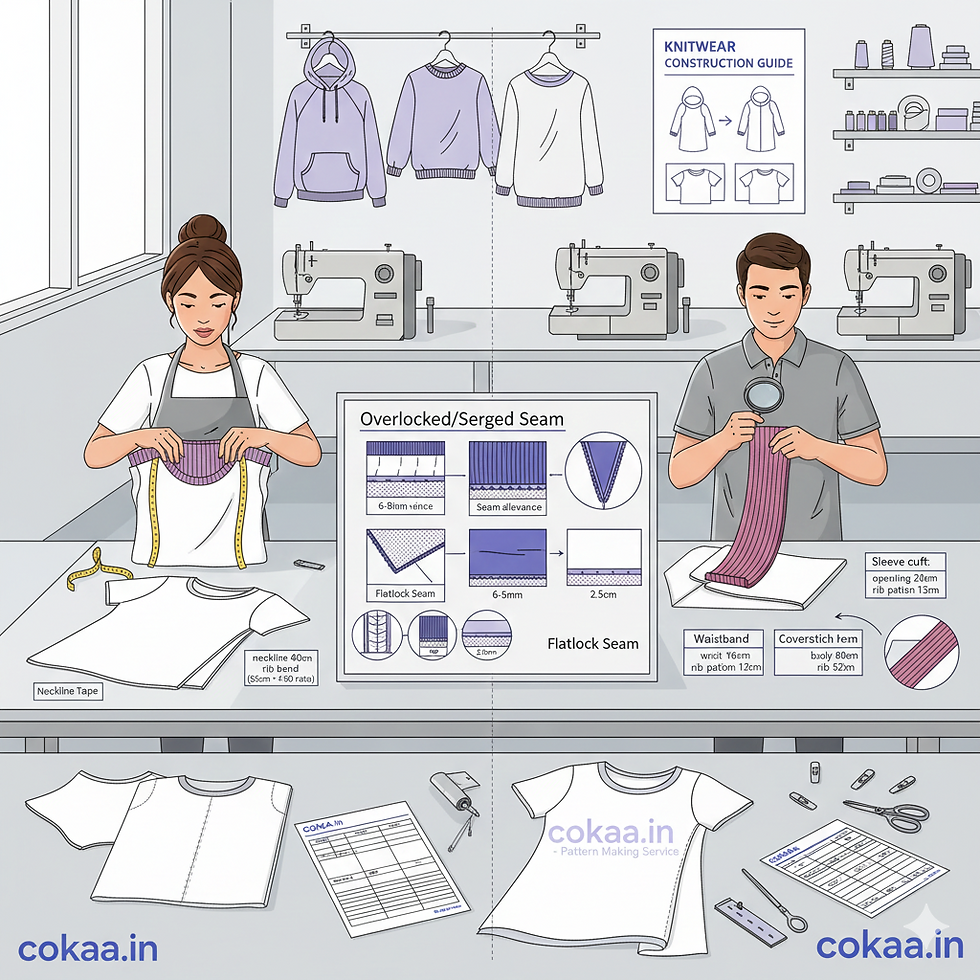
Overlocked/Serged Seams (Most Common): Women's top patterns, men's t-shirt patterns, girls' dress patterns in knits: 6-8mm seam allowance standard. Narrower than wovens because overlock stitch contains raw edge while allowing stretch.
Flatlock Seams (Activewear): Women's legging patterns, men's performance t-shirt patterns: 3-5mm seam allowance. Seam lies flat, requires minimal fabric. Pattern must be precise—no fitting room during construction.
Coverstitch Hems: Women's crop top patterns, men's hoodie patterns, unisex sweatshirt patterns: 2.5-3cm hem allowance typical. Twin needle coverstitch creates professional knit finish while maintaining stretch.
Neckline Engineering for Knits
Critical Fitting Area:
Necklines in women's kurta patterns, men's shirt patterns woven fabrics maintain shape through structure. Knitwear pattern making must prevent stretching while allowing overhead entry.
Neckband Calculation:
Women's t-shirt patterns crew neck: Measure neckline opening, multiply by 0.75-0.85 depending on rib stretch. Example: 50cm neckline opening, rib has 100% stretch, neckband cut at 40cm (50 × 0.80) creating fitted neck preventing stretching.
Women's dress patterns V-neck in knit: Requires stabilization tape or clear elastic in pattern specifications to prevent point dropping or stretching.
Men's hoodie patterns hood attachment: Pattern includes stay-stitching line at neck edge before hood attachment preventing stretch during construction.
Binding vs Banding:
Self-fabric binding (women's crop top patterns, girls' top patterns): Pattern includes bias-cut binding strips. Stretch properties different from garment body—calculations specific.
Ribbed banding (men's sweatshirt patterns, boys' t-shirt patterns): Separate rib pattern piece calculated for stretch ratio different from main fabric.
Sleeve Construction Variations
Knit Sleeve Challenges:
Set-in sleeves in women's jacket patterns woven require ease at cap for smooth insertion. Knitwear pattern making handles sleeves differently:
Reduced Sleeve Cap Ease: Women's top patterns in knit: Sleeve cap ease reduced to 1-2cm versus 3-4cm in wovens. Knit fabric stretches slightly during sleeve insertion—excess ease creates puckering.
Raglan Sleeve Patterns: Men's hoodie patterns, women's sweatshirt patterns: Raglan construction eliminates set-in sleeve challenges. Pattern pieces extend from neckline to underarm in continuous seam. Ideal for knitwear—minimal fitting issues, comfortable, athletic aesthetic.
Dropped Shoulder Construction: Men's oversized t-shirt patterns, women's relaxed top patterns: Shoulder seam drops below natural shoulder point. Simplifies construction, accommodates stretch, creates contemporary casual aesthetic. Pattern making straightforward—sleeve connects at dropped point rather than shoulder seam.
Part 3: Sweater Pattern Design Specifics
Specialized techniques for pullover and cardigan knitwear.
Ribbing Pattern Engineering
Function of Rib Knits:
Women's sweater patterns, men's sweatshirt patterns, unisex hoodie patterns all utilize ribbing (1×1, 2×2 rib knits) at cuffs, waistbands, necklines. Rib provides elasticity, shape retention, professional finish.
Rib Ratio Calculations:
Body fabric measures 80cm at hem, rib fabric has 100% stretch with excellent recovery. Rib pattern width: 80cm × 0.65 = 52cm. Rib stretches to fit body opening, returns to smaller measurement maintaining shape.
Women's jacket patterns in knit with rib waistband: Body width 90cm, rib pattern 60cm (90 × 0.67), creating fitted waistband preventing garment from riding up.
Men's hoodie patterns cuffs: Sleeve opening 20cm, wrist measurement 16cm, rib cuff pattern 13cm (16 × 0.80), providing comfortable fitted cuff maintaining warmth.
Rib Attachment Methods:
Pattern specifications indicate attachment technique:
Stretched attachment: Rib stretched to match garment opening while sewing
Gathered attachment: Garment eased to fit rib (less common, creates fuller silhouette)
Measurement-matched attachment: Both pieces same length (minimal rib stretch utilization)
Colorwork and Pattern Knit Considerations
Jacquard and Fair Isle Knitwear:
Women's sweater patterns with colorwork, men's traditional sweater patterns have reduced stretch due to multiple yarn layers. Pattern making must compensate:
Stretch Reduction Factor: Single color jersey: 50% stretch. Same fabric with Fair Isle colorwork: 25% stretch. Sweater pattern design increases pattern dimensions or uses different fit approach.
Gauge Variations: Ribbed sections pull in more than colorwork sections. Women's sweater patterns alternating rib and jacquard require careful pattern engineering—each section calculated for its specific fabric behavior.
Cardigan Front Band Engineering
Buttonhole Band Patterns:
Women's jacket patterns as cardigans, men's cardigan patterns require front bands maintaining stability preventing stretch:
Integrated Band: Band cut in one piece with garment front (women's kurta patterns as cardigans). Pattern includes stay-stitching or stabilization ribbon to prevent stretch. Buttonhole positions precisely marked on pattern.
Separate Band: Band piece cut separately (often in rib or double-layer) and attached (men's cardigan sweater patterns). Band pattern calculated for stretch ratio different from body. Typically 75-85% of front opening length to provide slight gathering preventing gaping.
Buttonhole Spacing: Pattern marks buttonhole positions accounting for fabric stretch. Knit fabrics require reinforcement—pattern specifications indicate interfacing or stay placement around buttonholes preventing distortion.
Part 4: Category-Specific Knitwear Pattern Making
Specialized approaches for different garment categories.
Women's Knitwear Patterns
Women's T-Shirt Patterns: Foundation garment requiring precise fit engineering. Pattern accounts for 40-60% stretch, uses negative ease for comfortable fit, includes specialized neckline and sleeve construction. Hem allowance 2.5-3cm for coverstitch finish. COKAA's women's top patterns in knit versions include stretch percentage specifications and construction method recommendations.
Women's Crop Top Patterns: Contemporary fitted knit tops require careful stretch calculation. Pattern dramatically reduced from body measurements using fabric recovery properties for close fit. Underband often uses rib knit requiring separate pattern calculation. Our women's crop top patterns specify fabric stretch requirements (minimum 40% with good recovery) ensuring successful results.
Women's Legging Patterns: High-performance knit requiring excellent stretch and recovery. Pattern uses significant negative ease (25-30% reduction from body measurements). Waistband engineering critical—elastic integration or fold-over waistband options included in pattern specifications. COKAA's women's legging patterns include gusset construction details and rise calculations specific to stretch fabrics.
Women's Dress Patterns in Knit: Require different engineering than woven versions. Bodice uses negative ease for fitted areas, skirt may use positive ease depending on style. Waistline stabilization prevents stretching. Sleeve and neckline construction follows knit-specific methods. Our women's dress patterns available in both woven and knit versions with appropriate technical differences.
Women's Nightwear Patterns: Comfort priority in knit sleepwear. Women's nighty patterns and night pajama patterns use relaxed fit with moderate positive ease. Knit versions more comfortable than woven alternatives. Pattern includes soft elastic casings, comfortable ribbing options, stretch-appropriate construction methods.
Men's Knitwear Patterns
Men's T-Shirt Patterns: Classic knit garment requiring proper proportion and fit engineering. Pattern accounts for fabric stretch (typically 40-50% horizontal) using slight negative ease for comfortable fit. Neckband calculation critical for durability. Shoulder seam placement affects fit and comfort. COKAA's men's t-shirt patterns include both fitted and regular fit options with appropriate stretch compensation.
Men's Oversized T-Shirt Patterns: Contemporary relaxed fit requiring different approach. Despite oversized silhouette, pattern still uses fabric stretch properties—slight negative ease prevents excessive fabric creating sloppy appearance. Dropped shoulder construction common. Hem and sleeve proportions critical for aesthetic. Our men's oversized t-shirt patterns engineered for current fashion proportions.
Men's Hoodie Patterns: Complex knit garment combining hood, body, pockets, ribbing. Pattern engineering critical for proper hood fit (too small restricts, too large looks sloppy), kangaroo pocket stability, ribbed cuff and waistband ratios. Raglan or set-in sleeve options require different pattern approaches. COKAA's men's hoodie patterns include complete construction specifications for professional results.
Men's Sweatshirt Patterns: Similar to hoodies minus hood complexity. Crewneck requires precise neckband calculation. Ribbed trims at neck, cuffs, waist require stretch ratio engineering. Pattern accounts for fabric weight (lightweight fleece vs heavyweight) affecting drape and wearing ease. Our men's sweatshirt patterns specify fabric weight recommendations.
Men's Pant Patterns in Knit: Casual knit pants (joggers, lounge pants) require different engineering than woven men's formal pant patterns. Elastic waist integration, drawstring casings, ankle cuff ribbing all require specialized pattern features. Stretch accommodation in seat and thigh areas. COKAA's men's pant patterns include knit versions with appropriate construction modifications.
Kids' Knitwear Patterns
Girls' Dress Patterns in Knit: Children's comfort priority makes knit fabrics ideal. Pattern uses moderate negative ease allowing growth accommodation while maintaining fit. Simple construction appropriate for knits—minimal closures utilizing overhead stretch. Ribbed trims or fold-over hems. Our girls' dress patterns include knit-specific versions recognizing different technical requirements.
Boys' T-Shirt Patterns: Active children require durable knit construction. Pattern accounts for fabric stretch and recovery under play stress. Reinforced shoulders and necklines. Simple construction for efficient production. COKAA's boys' t-shirt patterns engineered for durability and comfort.
Girls' and Boys' Co-ord Set Patterns: Popular matching sets in knits require coordinated pattern engineering. Top and bottom pieces use same fabric typically, requiring consistent stretch accommodation. Proportions balanced for children's body types. Our girls' co-ord set patterns and boys' co-ord set patterns in knit versions include complete sets with technical specifications.
Unisex Knitwear Patterns
Unisex T-Shirt Patterns: Gender-neutral fit requires balanced proportions suitable for various body types. Pattern uses moderate ease with stretch accommodation. Simple construction, durable finish. Our unisex pattern collection emphasizes versatile fit engineering appropriate for diverse customers.
Unisex Hoodie and Sweatshirt Patterns: Casual comfortable knitwear naturally suits unisex styling. Pattern engineering focuses on comfortable fit for range of body proportions. Standard sizing works across genders with knit fabric stretch providing fit accommodation. COKAA's unisex patterns simplify inventory while serving diverse customer base.
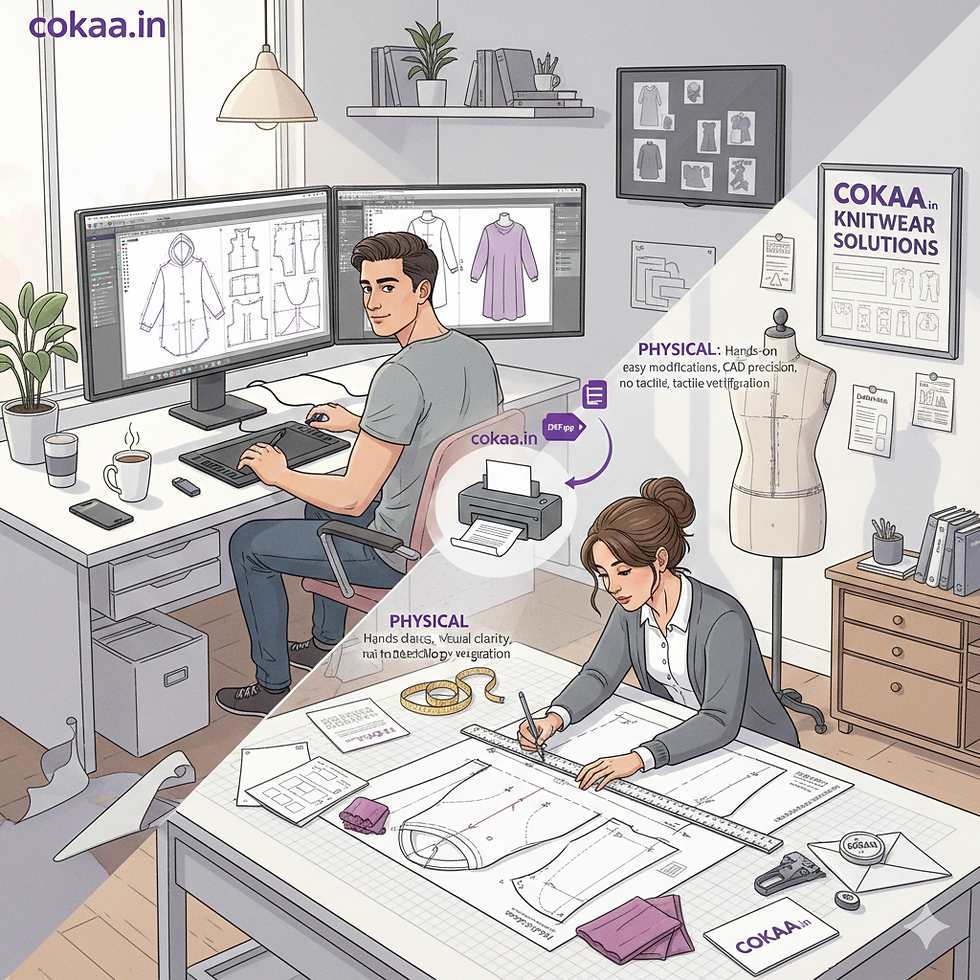
Part 5: Digital Patterns vs Physical Patterns for Knitwear
Format considerations for knit garment pattern delivery.
Digital Patterns for Knit Production
CAD File Advantages:
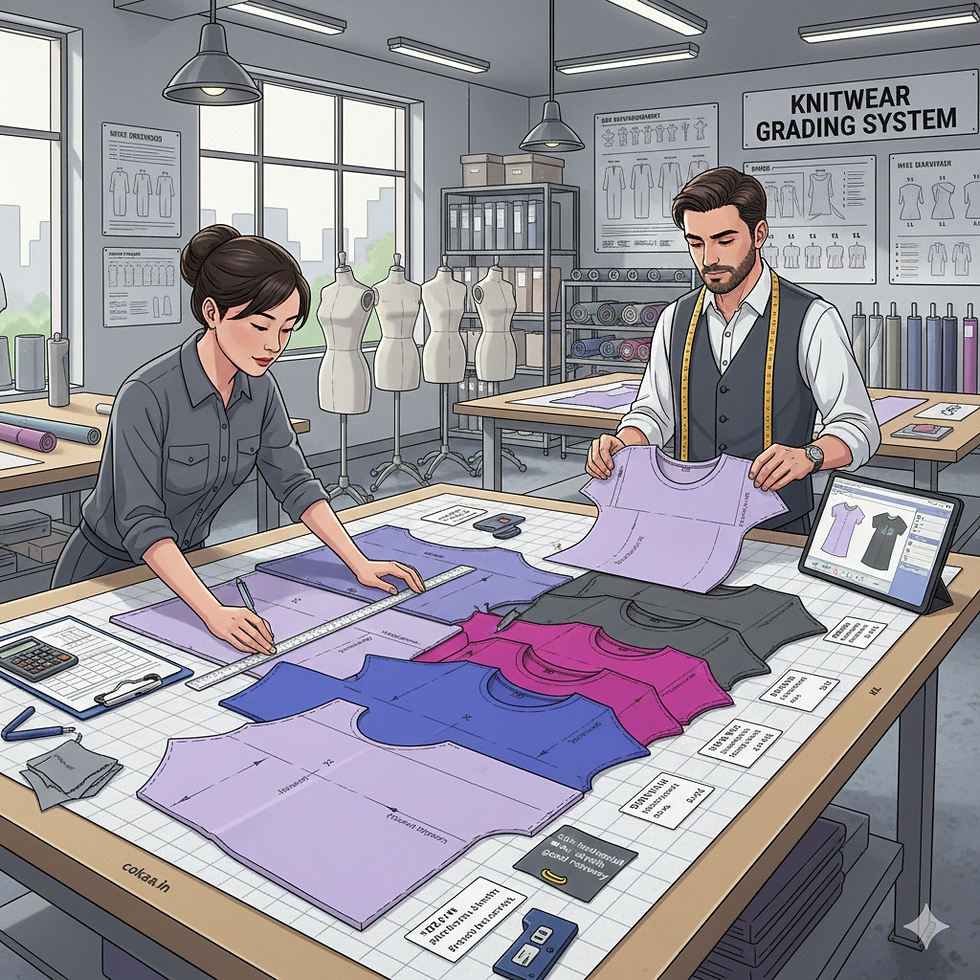
Knitwear pattern making complexity benefits from digital precision. Women's legging patterns with multiple sizes and stretch variations easily graded and modified digitally. Men's hoodie patterns with hood construction details clearly marked in CAD software.
Stretch Notation in Digital Patterns:
COKAA's digital patterns for knitwear include specific stretch annotations: Required fabric stretch percentage marked on each pattern piece. Construction method specified (overlock, coverstitch, flatlock). Stabilization areas indicated (necklines, shoulders requiring stay-stitching).
Manufacturing Integration:
Digital patterns for women's crop top patterns or men's sweatshirt patterns integrate directly with automated cutting systems in production facilities. Stretch knit cutting requires precision—digital markers optimize fabric utilization while respecting pattern direction and stretch requirements.
Physical Patterns for Traditional Knitwear Production
Paper Pattern Benefits:
Small-scale production of women's nightwear patterns or boutique men's sweatshirt patterns benefits from physical patterns. Easier for traditional tailors to visualize and cut. Pattern markings clearly visible—stretch direction arrows, grain lines, construction notes.
Knit-Specific Markings:
Physical patterns include clear stretch indicators (arrows showing maximum stretch direction), stay-stitching guidelines (marked lines where stabilization needed before assembly), rib attachment notations (indicating stretched or relaxed attachment method).
Conclusion
Knitwear pattern making requires specialized expertise fundamentally different from woven garment pattern making. Success demands understanding fabric stretch and recovery, calculating negative ease properly, engineering knit-specific construction methods, and applying category-specific techniques across women's, men's, and kids' knit garments.
COKAA.in, India's 1st online sewing pattern provider, delivers professional knitwear pattern making services combining technical precision with practical production knowledge. Our sweater pattern design expertise and knit garment patterns span all categories—from women's t-shirt patterns and legging patterns to men's hoodie patterns and sweatshirt patterns, girls' dress patterns to boys' t-shirt patterns in knits.
Whether you need digital patterns for modern manufacturing or physical patterns for traditional production, custom pattern making service for unique designs, or ready-made patterns for immediate use, COKAA provides complete knitwear pattern
solutions. Your fashion journey with our patterns includes specialized support for knit fabrics ensuring successful production across all garment categories.
Master knitwear pattern making with COKAA's specialized techniques. Visit COKAA.in for professional knit garment patterns, sweater pattern design services, and expert pattern making guidance for stretch fabrics. From sketch to sample, we support your knitwear success.
Frequently Asked Questions
How is knitwear pattern making different from woven pattern making? Knitwear pattern making accounts for fabric stretch (20-60%) requiring negative ease, specialized seam allowances (6-8mm vs 1.5cm), knit-specific construction (ribbing ratios, neckband calculations, hem methods), and stabilization techniques. Patterns are smaller than body measurements because fabric stretches to fit—opposite of woven pattern making principles.
What stretch percentage should I use for pattern calculations? Test your actual production fabric. Women's t-shirt patterns typically use jersey with 40-60% stretch, women's legging patterns need 40%+ with excellent recovery, men's hoodie patterns work with 40-50% stretch. COKAA patterns specify required fabric stretch ensuring compatibility and success.
Can I use the same pattern for woven and knit fabrics? No. Women's dress patterns designed for wovens fail in knits due to incorrect ease, seam allowances, and construction methods. Knit versions require separate pattern engineering. COKAA offers both woven and knit versions of popular patterns recognizing fundamental technical differences requiring specialized development.
Comments